brand/foundational/sources/README.md
Resources & Sources
Annotated bibliographies of the work behind Qpoint's design methodology, beyond the thesis itself, and of thinkers shaping our thinking lately. Compiled 2026-10-20 (c117). Each entry gives a citation checked against a publisher record, Crossref or the printed page; a short summary; for the methodology's sources, its relevance to brand/design_methodology.md; and where a legal full text can be read. Local copies of the 17 open full texts are listed on each person's page. Copies found only on third-party mirrors are listed as mirrors to avoid, not as sources.
| Photo | Name | Summary |
|---|---|---|
 | Axel Roesler | Interaction designer, Professor and Chair of the Division of Design at the University of Washington. He trained in cognitive systems engineering with David D. Woods at Ohio State. He treats designing as forming hypotheses about change and as telling stories about the future, and he studies visibility in high-stakes work. He chaired Mark Parson's 2007 thesis. |
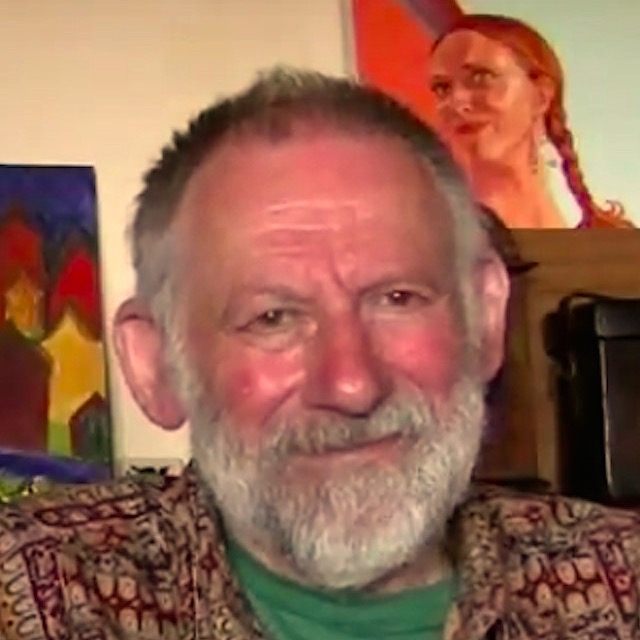 | Christopher Alexander 1936–2022 | Architect and design theorist at UC Berkeley, and founder of the Center for Environmental Structure. Notes on the Synthesis of Form (1964) treats design as fitting a form to its context, decomposing the problem into sets of interacting requirements; he disowned that method in 1971 in favour of the diagrams, which became the patterns of A Pattern Language (1977). The thesis's decomposition-and-modularity idea comes from him, and his pattern languages shaped software design patterns and the first wiki. |
 | Charles Jencks 1939–2019 | Architectural theorist and landscape designer who named and defined post-modern architecture as "double-coded". The Architecture of the Jumping Universe (1995) argues that complexity science, with its chaos, self-organisation and emergence, calls for a new architecture. The methodology's "edge of chaos" comes from it, and through it from Coleridge: Jencks was quoting the poet's "a more than usual state of emotion with more than usual order" (Biographia Literaria, 1817), which the thesis paraphrases. |
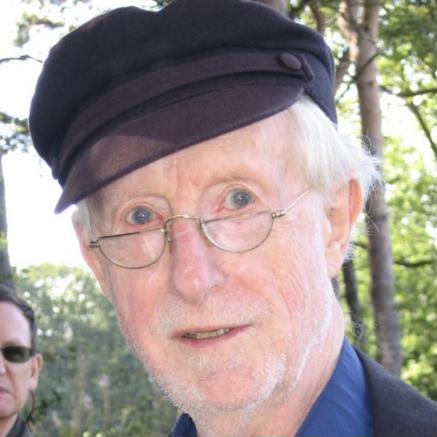 | J. Christopher Jones 1927–2022 | Welsh design theorist and a founder of the design methods movement. He organised the 1962 Conference on Design Methods, where his "Method of Systematic Design" set out analysis, synthesis and evaluation, and wrote Design Methods (1970), which restates them as divergence, transformation and convergence and catalogues 35 methods. In the 1970s he turned against the movement and wrote about designing as a continuous activity open to everyone. |
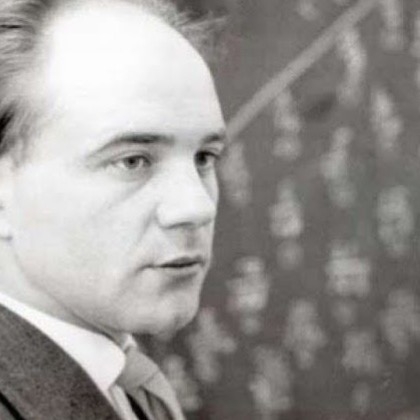 | Horst Rittel 1930–1990 | Design theorist. He taught at the HfG Ulm and then at UC Berkeley. With Webber he named "wicked problems" (1973): problems with no definitive formulation and no stopping rule, whose solutions are good or bad rather than true or false. He also developed IBIS, which treats design as argument among stakeholders. The methodology's wicked-problem properties come from him. |
 | Melvin M. Webber 1920–2006 | Urban planner at UC Berkeley and co-author of "Dilemmas in a General Theory of Planning" (1973). His earlier work described "community without propinquity" and the "nonplace urban realm", in which communities form through communication rather than through living near one another. The Rittel & Webber page also covers Churchman (1967) and Buchanan (1992). |
 | David Deutsch b. 1953 | Oxford physicist and a founder of quantum computation, and the originator of constructor theory. In The Fabric of Reality and The Beginning of Infinity he argues that knowledge grows by conjecture and error correction, that good explanations are hard to vary, and that problems are soluble. His work anchors c117's error-correction thread. |
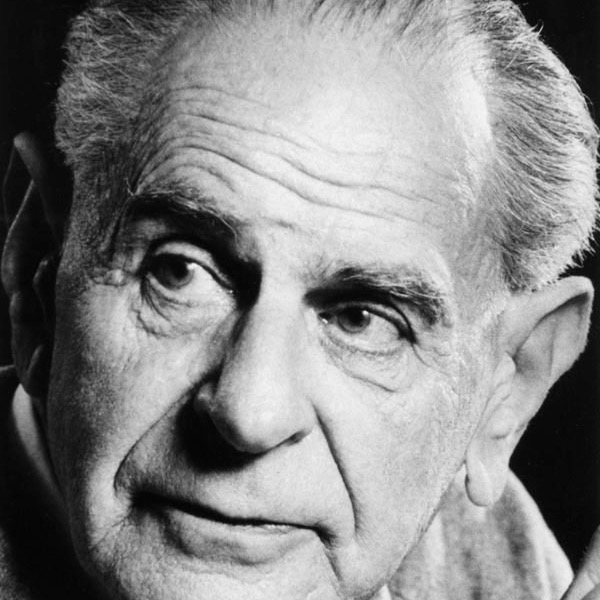 | Karl Popper 1902–1994 | Philosopher of science. Theories can never be proven, only tested and refuted, so knowledge grows through conjectures and refutations; we come to know a problem by trying to solve it (P1 → TT → EE → P2). In politics he argued for the open society and for piecemeal reform that keeps mistakes correctable. |
 | Joscha Bach b. 1973 | Cognitive scientist and AI researcher, and the author of the MicroPsi cognitive architecture. He argues that minds, selves and consciousness are models a computational system builds of its world and of itself. He leads the California Institute for Machine Consciousness. |
 | Michael Levin | Developmental and synthetic biologist at Tufts. He studies bioelectric signalling as the medium by which cells decide what shape to build. He argues that goal-directed problem-solving appears at every scale of biology, a "basal cognition", and his lab builds new living forms such as xenobots and anthrobots. |
Photo credits, the original images and the square crops are on the Photos page.
Start here
- Roesler, Woods & Feil (2005), "Inventing the Future of Cognitive Work: Navigating the 'Northwest Passage'". Roesler's design-method paper. It cites the thesis's canon (Alexander, Jones). Read: local PDF, from Roesler's UW faculty pages. More on the Roesler page.
- Roesler (2009), "Lessons from Three Mile Island", Visible Language 43(2/3). Visibility before control: an accident traced to displays that hid the relationships between failures. Read: local PDF, from the author and the journal archive.
- Alexander (1964), Notes on the Synthesis of Form. Design as fit between a form and its context, and a design problem decomposed into sets of interacting requirements: the source of the methodology's decomposition and modularity. Read the 1971 preface too, where he rejects the method and keeps the diagrams, later his patterns. In print from Harvard University Press, with a limited preview on Google Books; no open copy. Its first form, Alexander's 1962 conference paper on an Indian village, is open: local PDF. More on the Alexander page.
- Jencks (1995), The Architecture of the Jumping Universe, ch. VII, "The Ideal Poet" (p. 39). Where the edge-of-chaos formula comes from: Jencks quoting Coleridge's "a more than usual state of emotion with more than usual order", from Biographia Literaria (1817), ch. XIV. The thesis paraphrases Jencks. The book is out of print, with snippet view only on Google Books. Coleridge is open on Project Gutenberg. More on the Jencks page.
- Jones (1963), "A Method of Systematic Design". The three-stage process, analysis, synthesis and evaluation, as a method for design teams, from the 1962 conference that began design methodology. Read: local PDF, or the whole proceedings on the DRS Digital Library. More on the Jones page.
- Jones (1970), Design Methods, Part One. The same stages restated as divergence, transformation and convergence, and the designer seen as black box, glass box and self-organizing system. In print from Wiley, with a limited preview on Google Books; no open copy. More on the Jones page.
- Rittel & Webber (1973), "Dilemmas in a General Theory of Planning", Policy Sciences 4(2), 155–169. Wicked problems as formulated; the methodology quotes pp. 161 and 166. Read: local PDF, the UC eScholarship IURD reprint. More on the Rittel & Webber page.
- Rittel (1966/1971), "Some Principles for the Design of an Educational System for Design". The wicked-problem properties applied to design, before the 1973 planning paper: "every formulation of the problem is preliminary and incomplete." Read: local PDF, from UC eScholarship.
Notes for the methodology
What this research found that bears on the thesis and on brand/design_methodology.md (corrections, missing credits, counterweights and open questions) is gathered on its own page: Notes for the methodology.