synthetic-live-session-replay
Build a deterministic synthetic replay path for live-feeling qmap sessions
New in this cycle: Deterministic 10-second session replay — actors and flows arrive on a phased timeline
Why
qmap can already render static session topologies well, and c23 is proving that custom models can inhabit those scenes. What is still unresolved is the temporal layer: how actors appear over time, how flows accumulate, how phase changes are communicated, and how much layout churn is acceptable when a session unfolds live.
If we wait for real session feeds before solving those problems, we will end up debugging data contracts, playback controls, and visual behavior all at once. A synthetic replay cycle lets us rehearse that system deliberately, with deterministic input and repeatable outcomes.
This cycle is adjacent to:
c21.ai-session-map, which established the semantic AI-session topologyc22.runtime-session-map, which established the reduced runtime-session topologyc23.custom-obj-models, which uses runtime topology as a conservative model-integration sandbox
Objective
One runnable replay path that:
- plays a synthetic session over 10 seconds
- shows a clear progression from init -> research -> edit -> finalize
- emits session-shaped qmap data during playback
- supports basic playback controls and deterministic restart/seek behavior
- identifies the thinnest reusable seam for future real-data adapters
Scope
cycles/c24.synthetic-live-session-replay/— cycle metadata and planning docsdev/experiments/— an experiment surface that can host replay playback controls and qmap output- experiment-local replay helpers — scenario spec, timeline compiler, playback source, and adapters
Optional if clearly warranted:
- a narrow reusable playback utility in
src/if the experiment proves the seam is stable
Deliverables
- Cycle metadata
cycles/c24.synthetic-live-session-replay/CYCLE.mdcycles/c24.synthetic-live-session-replay/initial-prompt.mdcycles/c24.synthetic-live-session-replay/PLAN.md
- Runnable experiment support
- scenario spec(s)
- timeline compiler
- playback source
- minimal playback controls
Non-Goals
- Full generalization for every future session type
- Solving final production UX for transport controls
- Replacing all existing static fixtures
- Streaming real back-end data in this cycle
- Production-grade persistence, recording, or export features
Canonical Demo
The first replay should tell one concrete story:
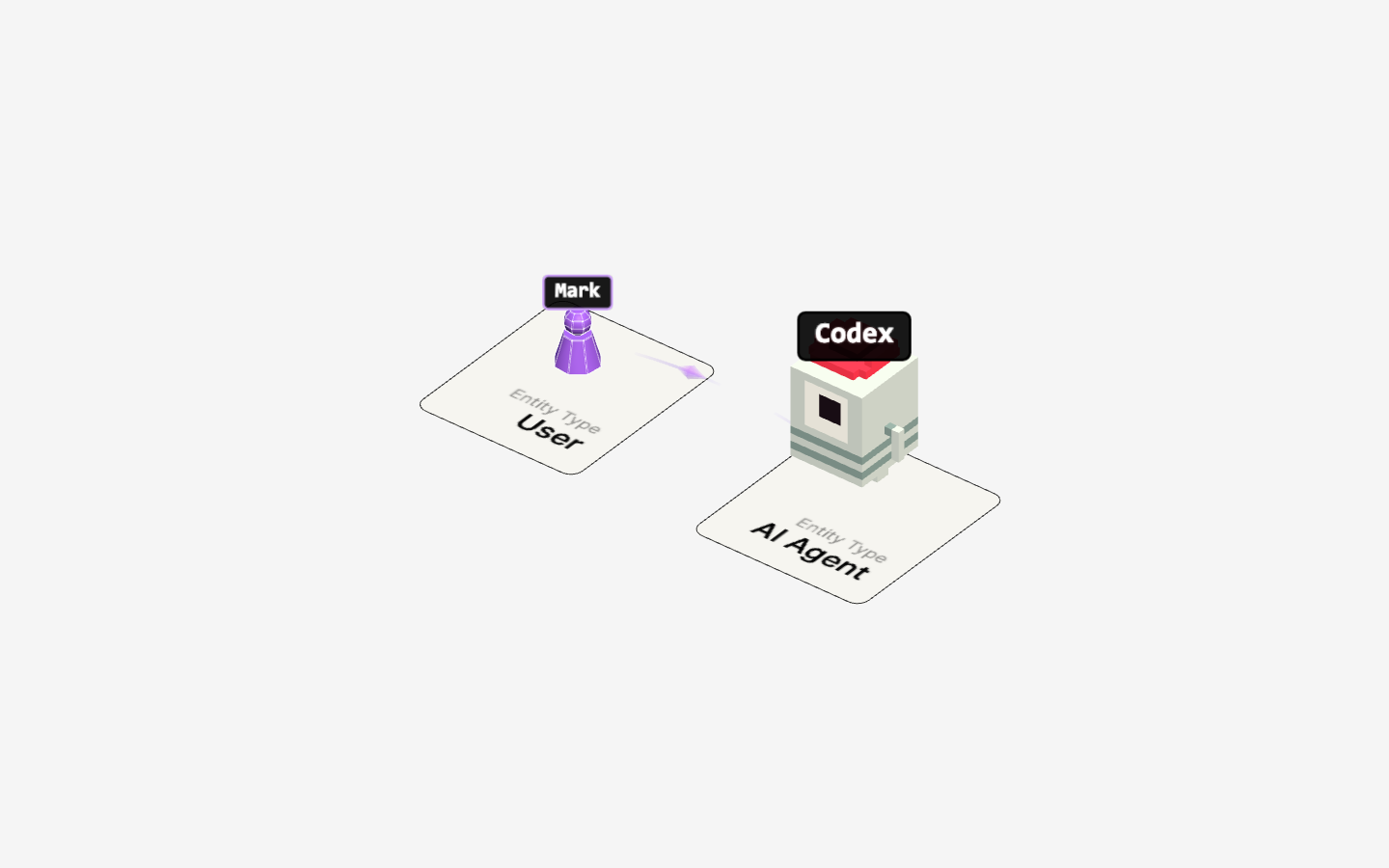
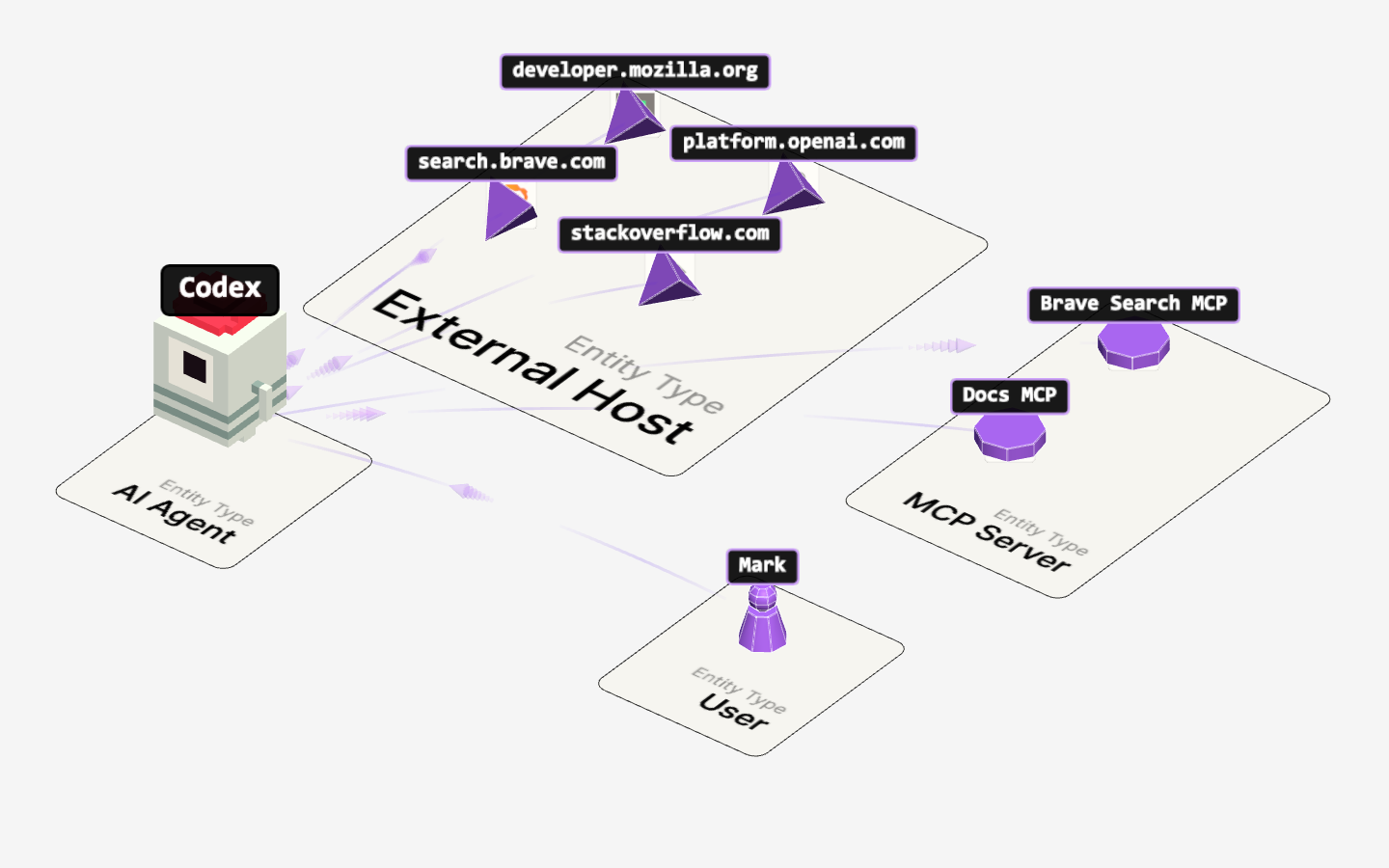
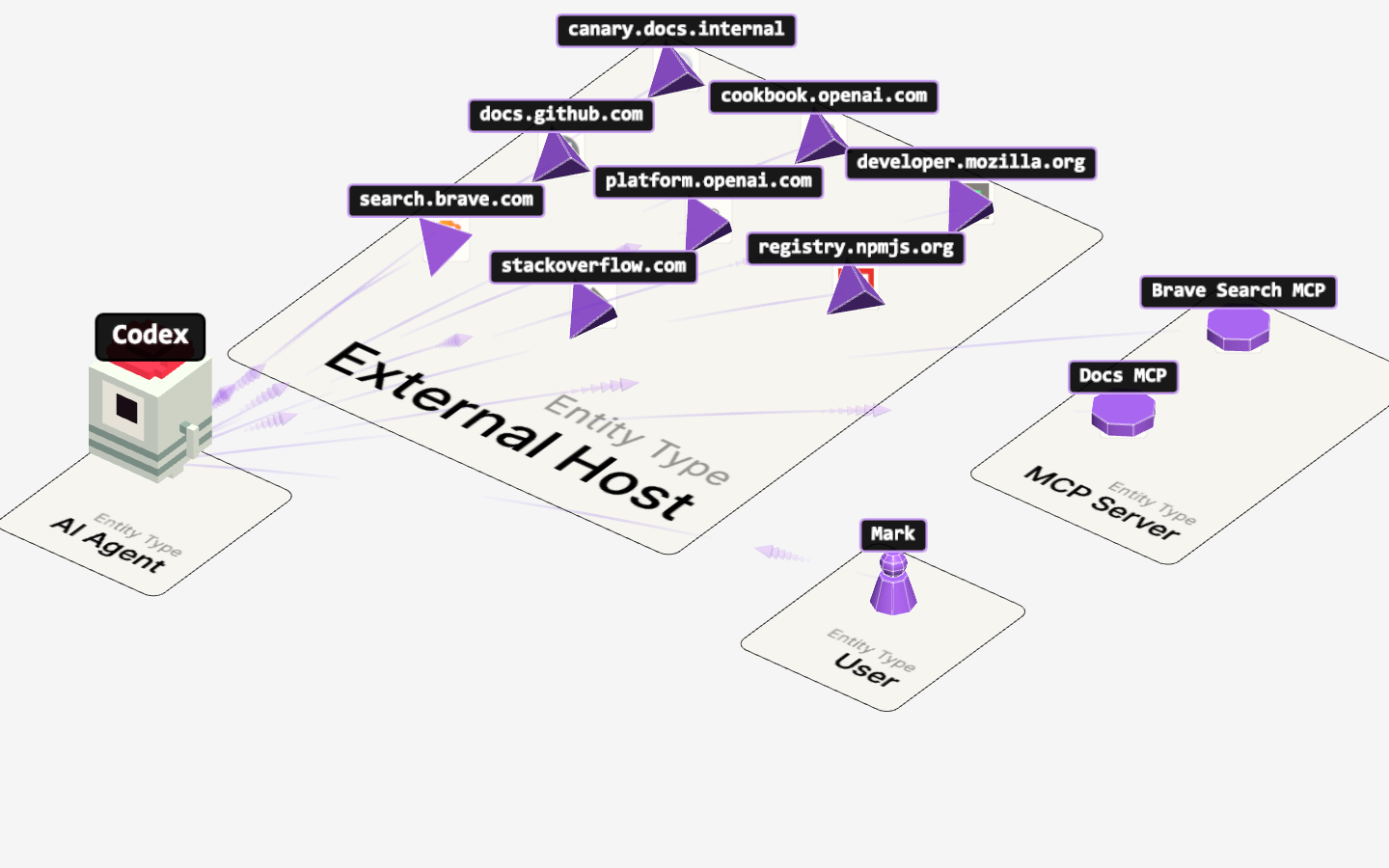
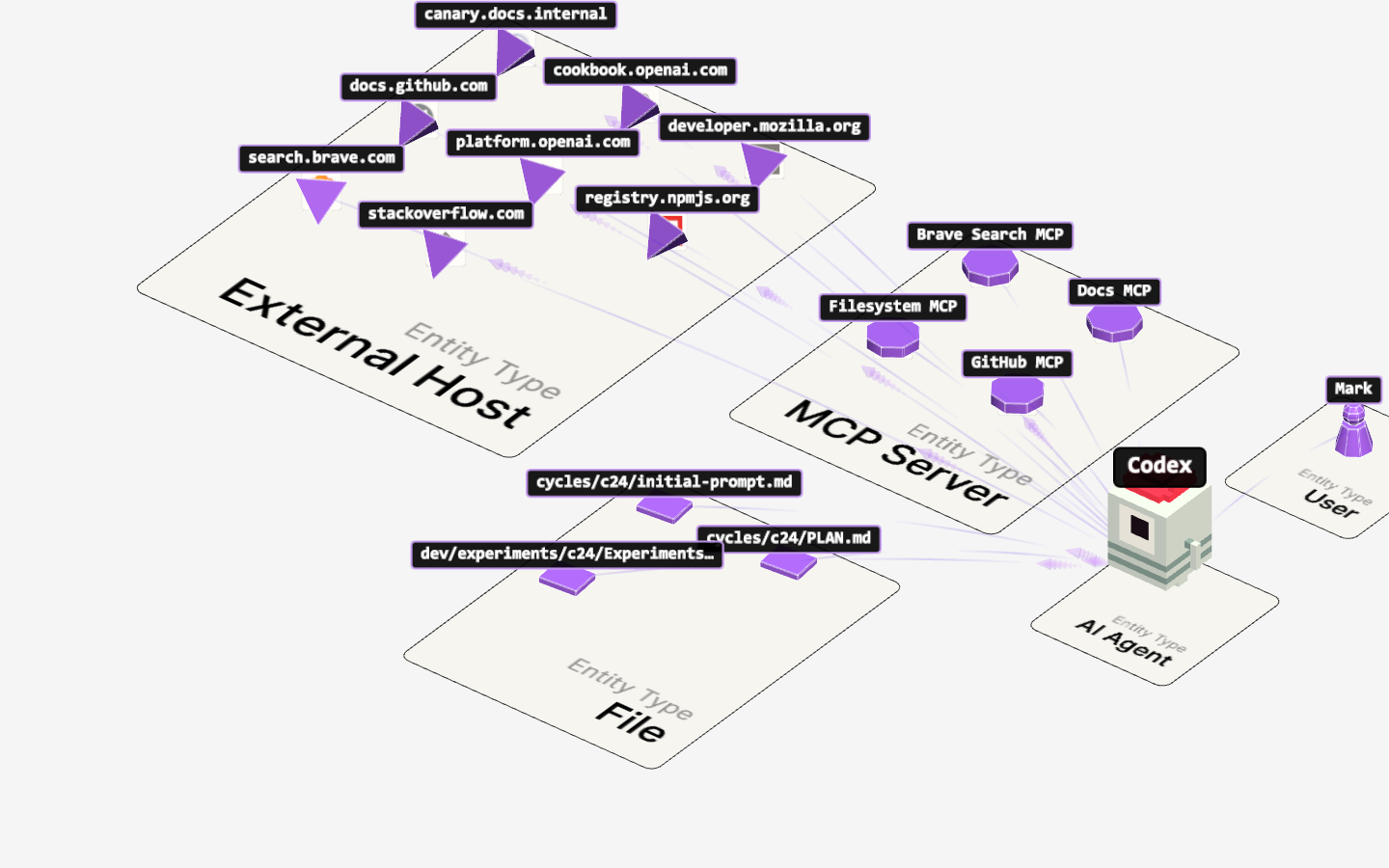
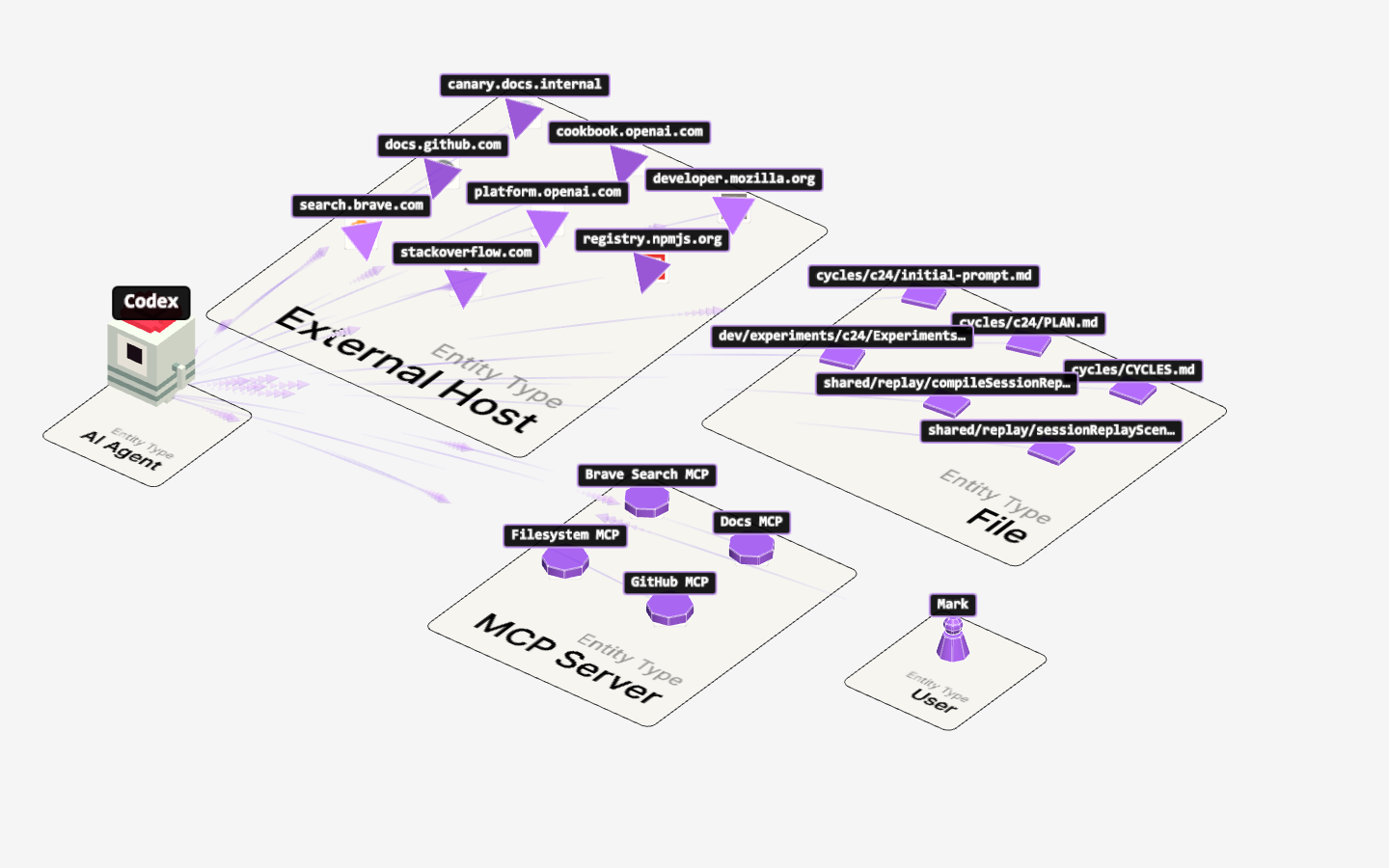
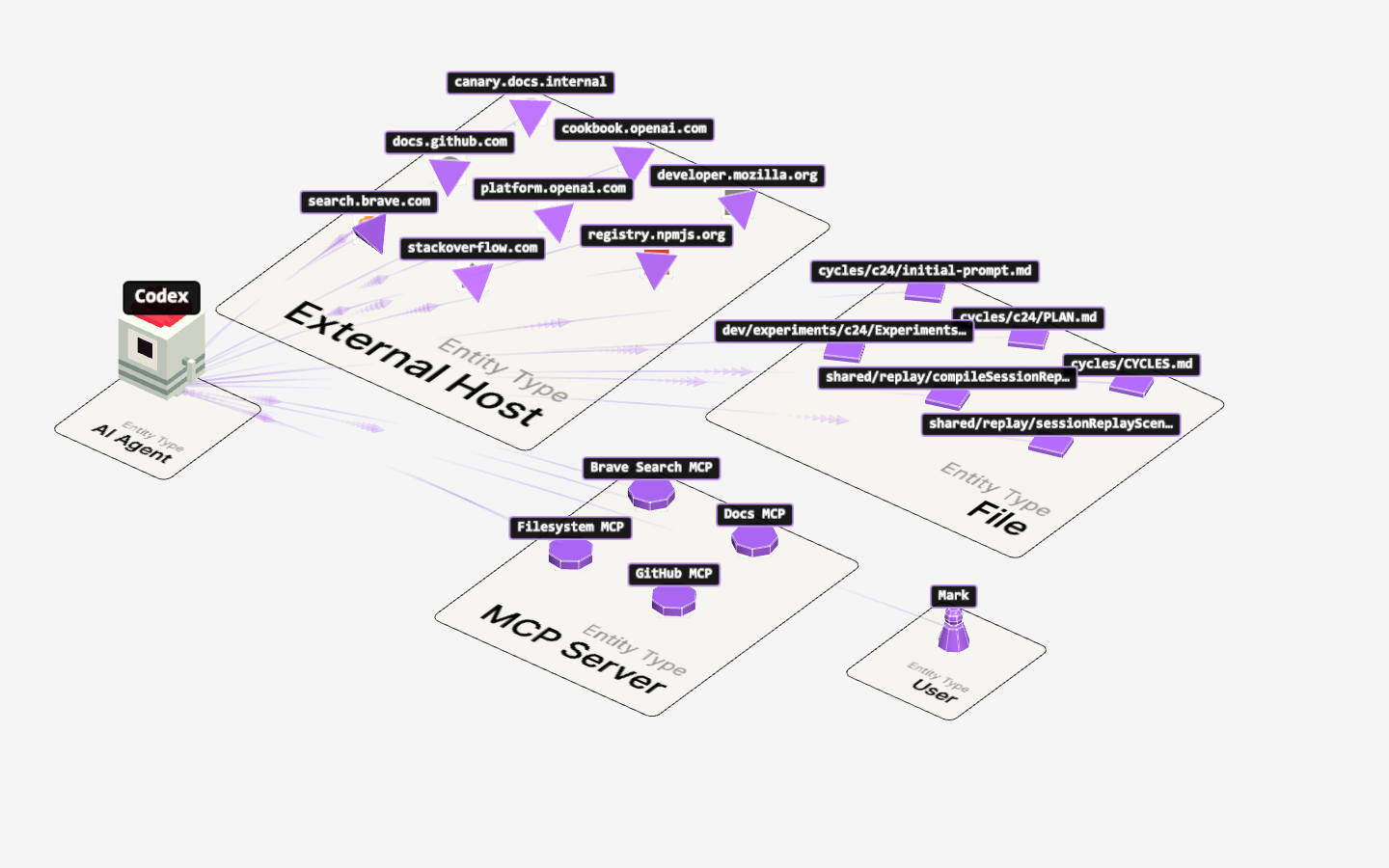
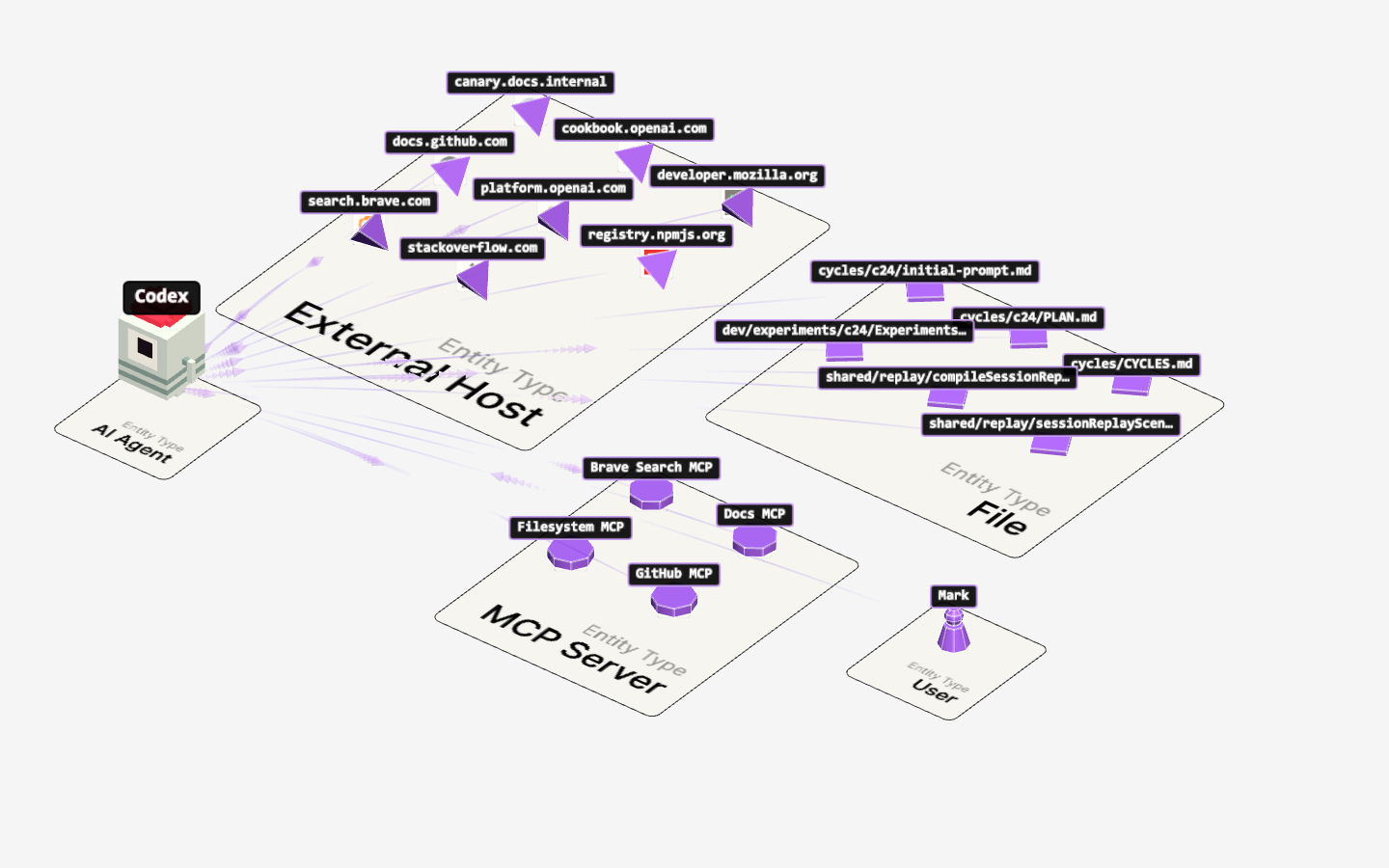
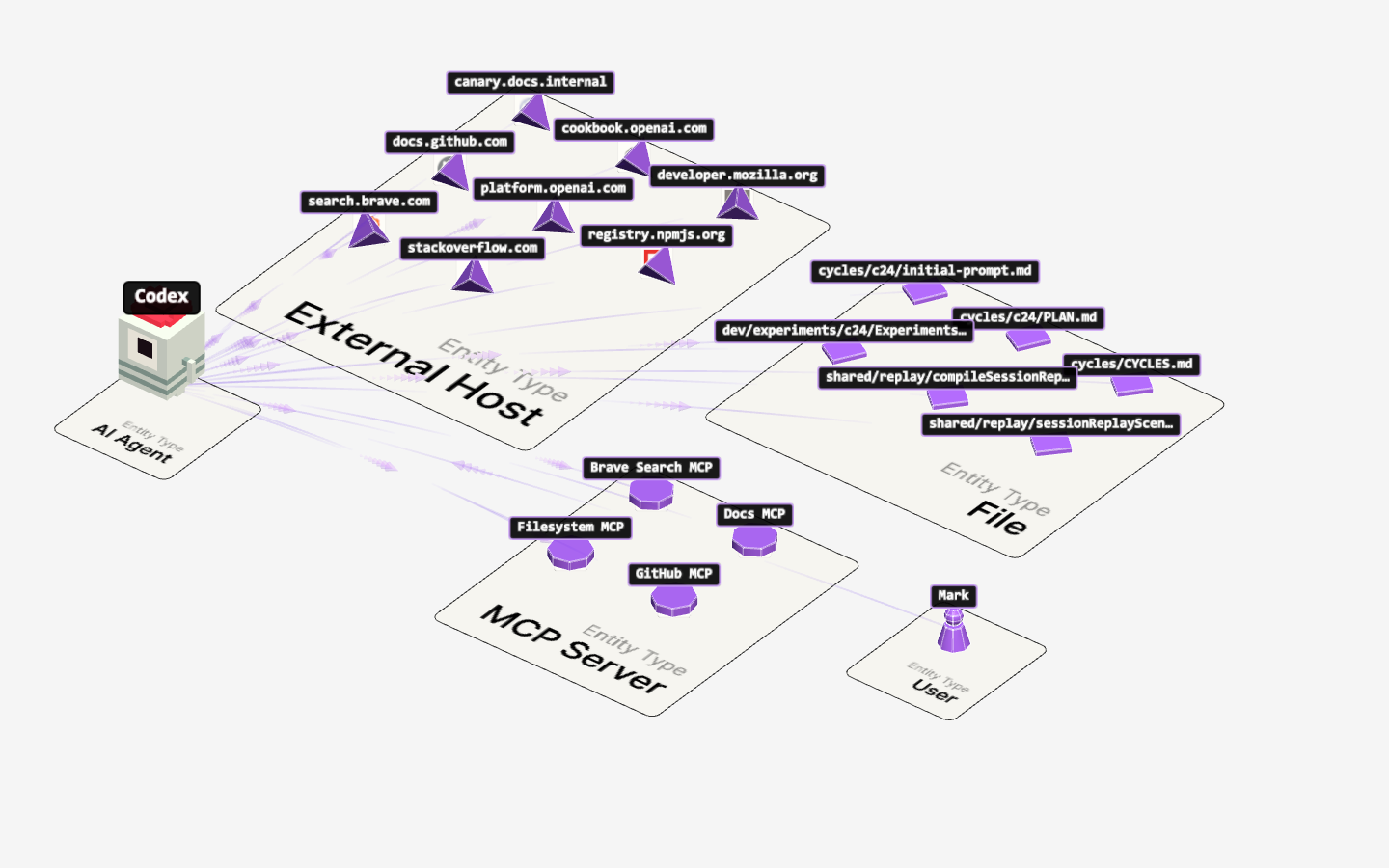
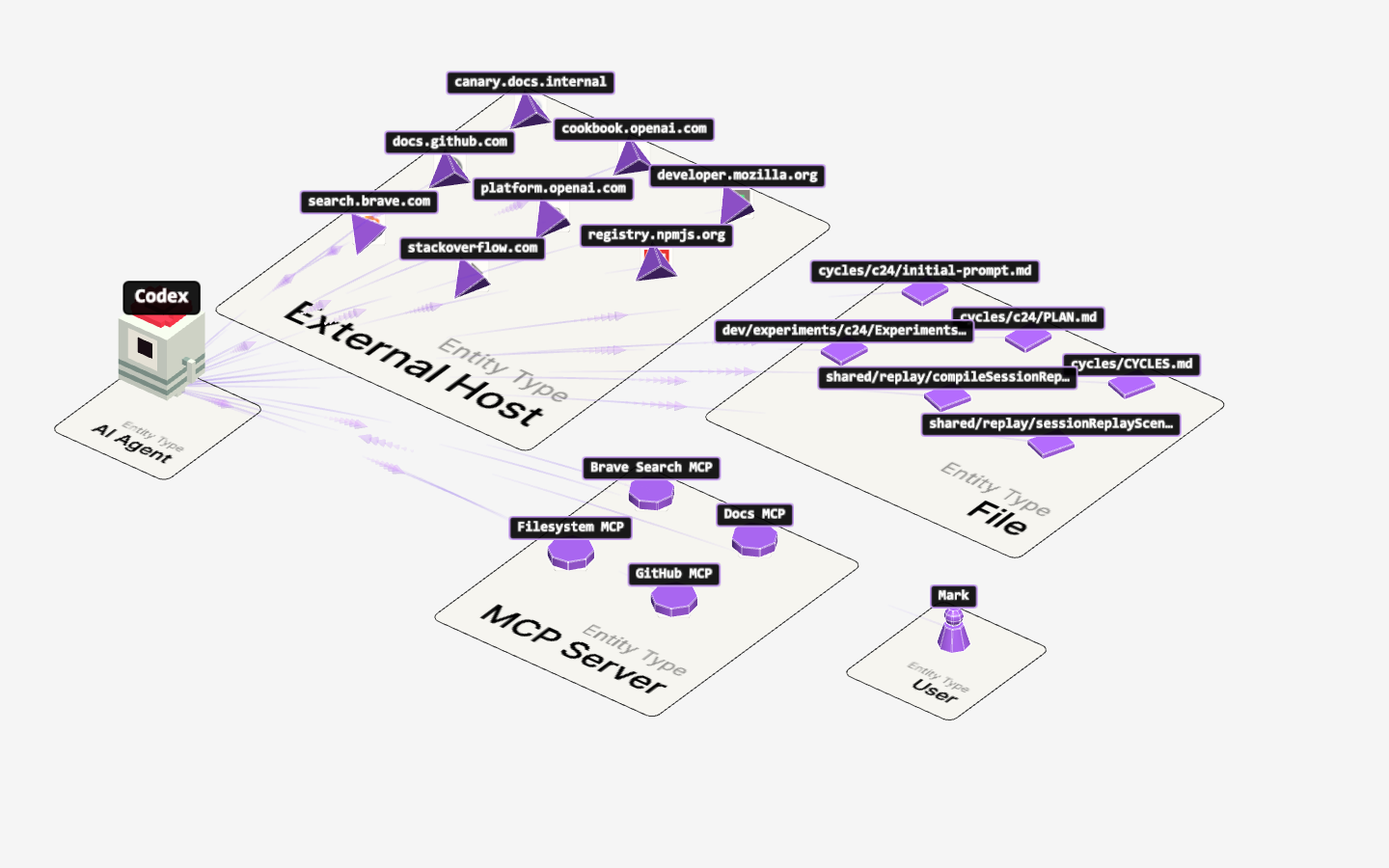
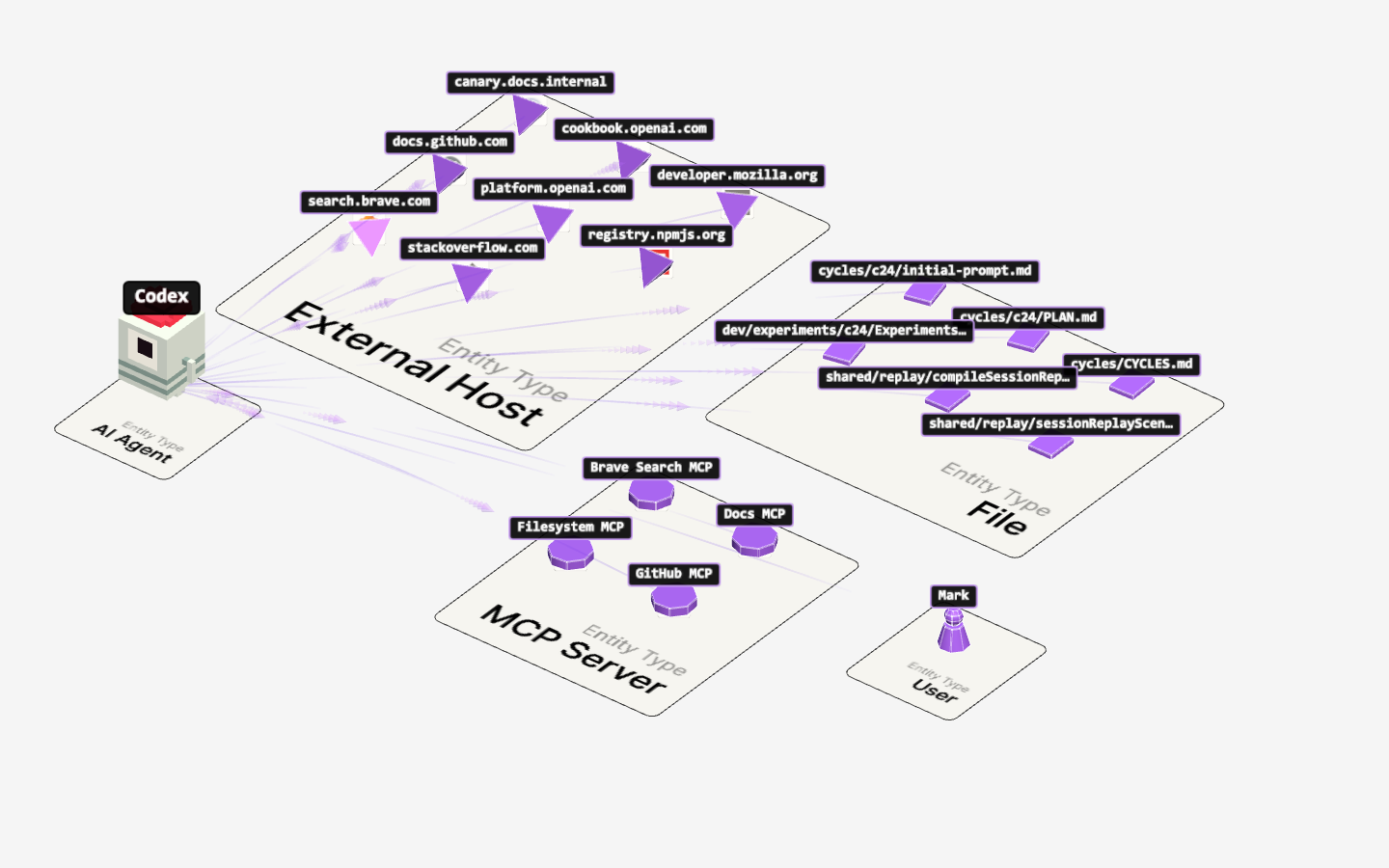
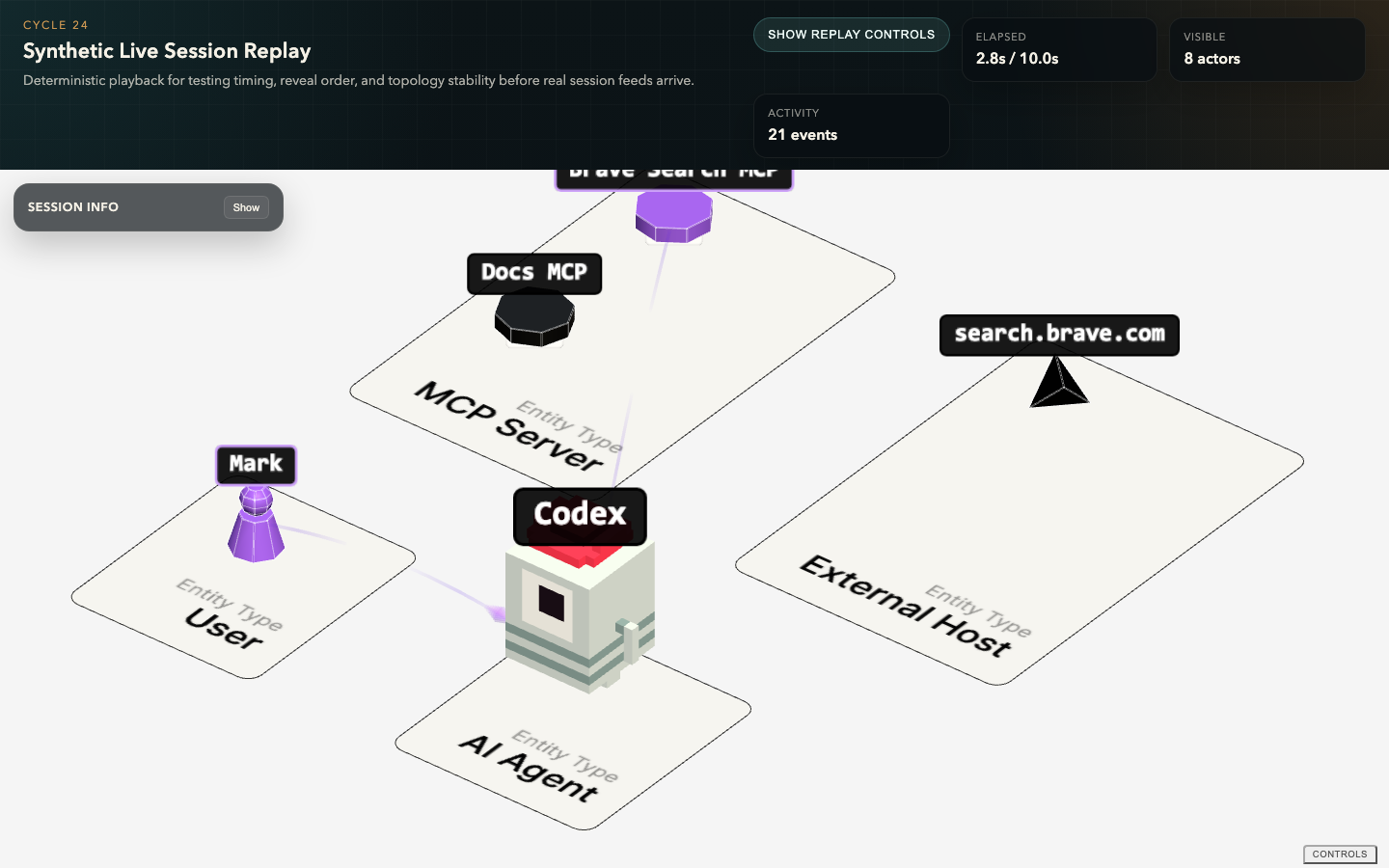
0ms - 1000ms: agent initializes1000ms - 4500ms: research phase touches 24 HTTP URLs4500ms - 9000ms: edit phase uses 4 MCP servers and touches 6 files9000ms - 10_000ms: finalize and settle into a readable end state
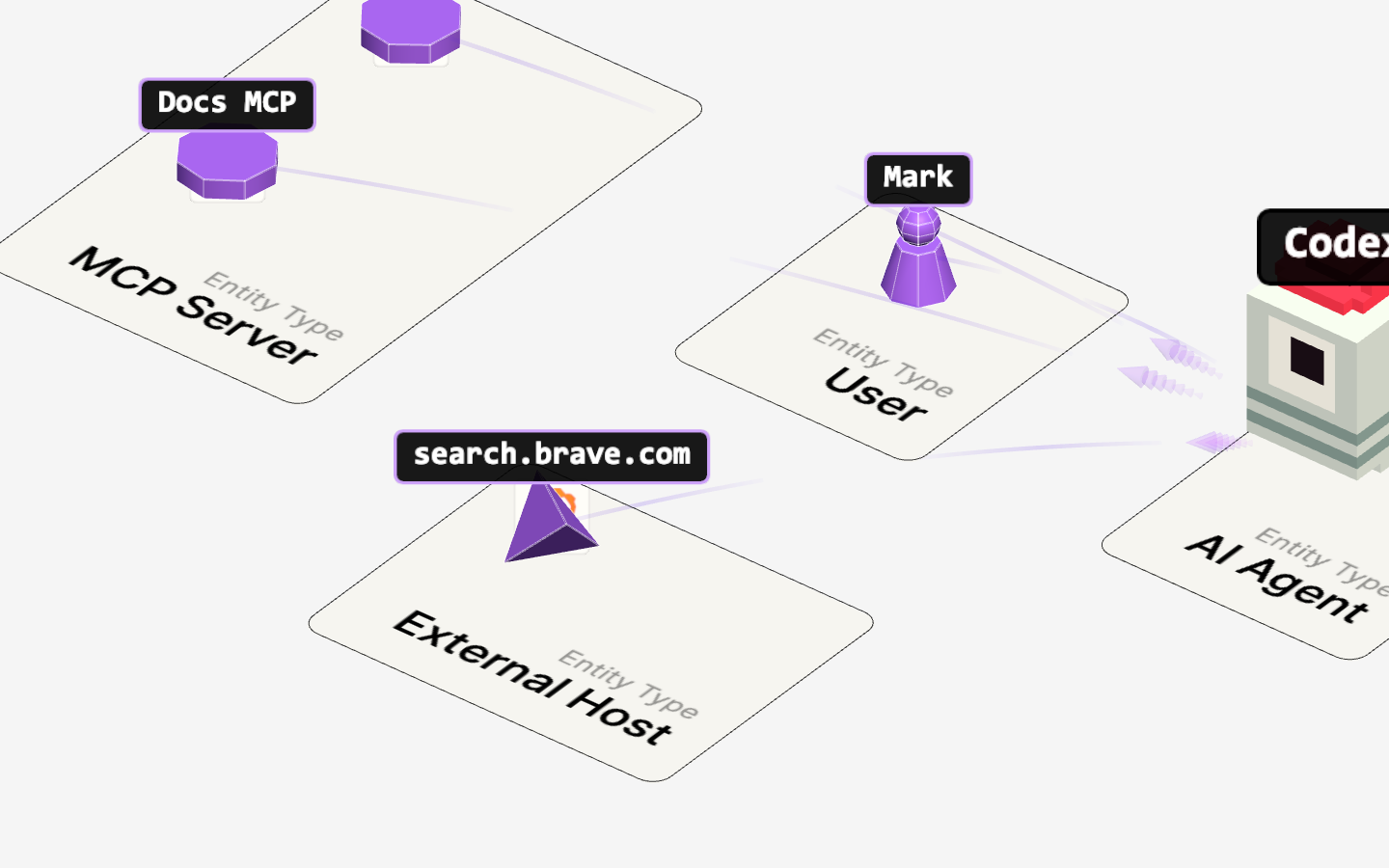
The canonical topology should preserve the richer agent-session concepts:
- User
- AI Agent
- MCP Server
- File
- External Host
That keeps phase semantics and MCP usage visible instead of flattening everything into a generic runtime starburst.
Architecture To Prove
The replay path should be split into three layers:
- Scenario spec
- human-authored story and actor roster
- Timeline compiler
- deterministic timed events and checkpoints
- Playback source
- play/pause/seek/restart and session-shaped output
The view should consume normal qmap session data and remain mostly agnostic to whether its source is static, replayed, or live.
Key Questions
- What is the smallest replay contract that still preserves meaningful phase semantics?
- How do we reveal actors over time without causing unacceptable layout churn?
- Should playback operate on timed events, precomputed snapshots, or both?
- What playback controls are sufficient for iteration without overbuilding UI?
- Can one replay transport serve both semantic agent sessions and future reduced runtime sessions through adapters?
- Does any of this need promotion into
src/, or should it remain experiment-local for now?
Success Criteria
- A deterministic 10-second replay runs end-to-end in qmap
- Playback can be paused, restarted, and scrubbed without desynchronizing state
- Phase changes are legible at a glance
- Actor and flow accumulation feels live without overwhelming the scene
- The cycle ends with a concrete recommendation for the reusable seam, if any
Initial Recommendation
Keep this replay system experiment-local first. If the compiler/playback boundary stabilizes and real-data adapters fit cleanly behind it, then promote only that narrow seam.
Visual record
12 captures — heroes, page slices, and full-page renders. Click to view.