Dashboard Reframing: AI Agent Visibility
Why
Enterprise AI agents (Claude Code, Cursor, LangChain pipelines, custom RAG systems) are increasingly autonomous actors making API calls, reading/writing files, invoking MCP tools, and triggering secondary network calls. The current dashboard is centered on traffic egressing to vendors — it lacks the primitives to reason about who ran an agent, what it did, what it accessed, and whether that behavior was safe. This cycle establishes the foundation.
Objective
Reframe Qpoint's dashboard around AI agent visibility — shifting from vendor egress monitoring to a comprehensive observability and security platform for autonomous AI agents. Establish the data model before designing any UI.
Scope
Three pre-design phases, then the standard brief → wireframe pipeline:
- Research — enumerate everything observable from an agent session with privileged system-level oversight (network, MCP, file system, process metadata)
- Inventory items — define the entities that sessions tag: Agent, User, Model (+ provider), MCP Server, Agent Capability (tools + skills), File, Endpoint, Secondary Call; plus session-detail items LLM Turn and Tool Call
- Data models — typed field definitions, identifiers, observation mechanisms, and entity relationships for each inventory item
- Brief — goal-oriented design brief per feature (deferred until models are signed off)
- Wireframes — lo-fi Wire* wireframes (deferred until brief)
Outcome
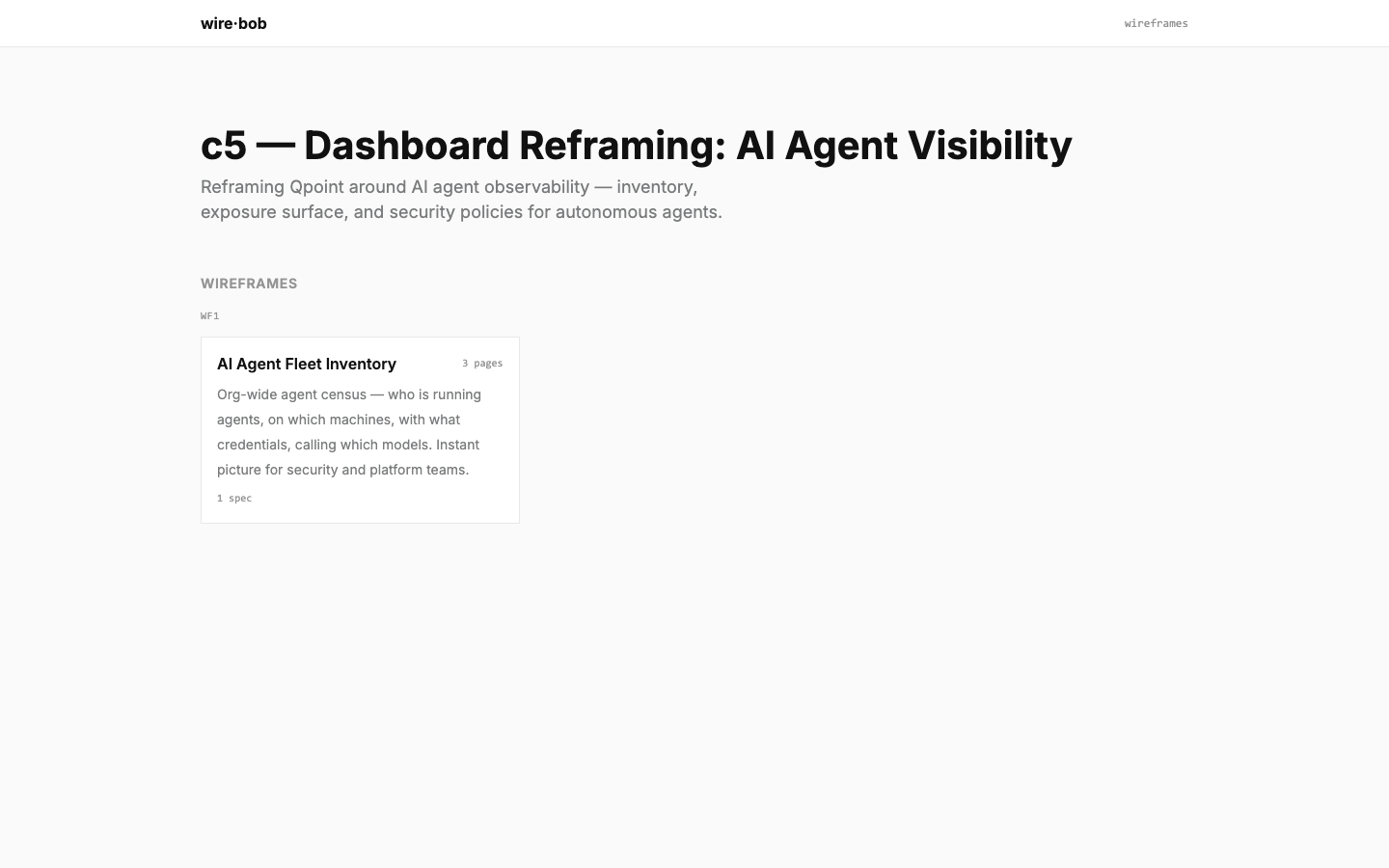
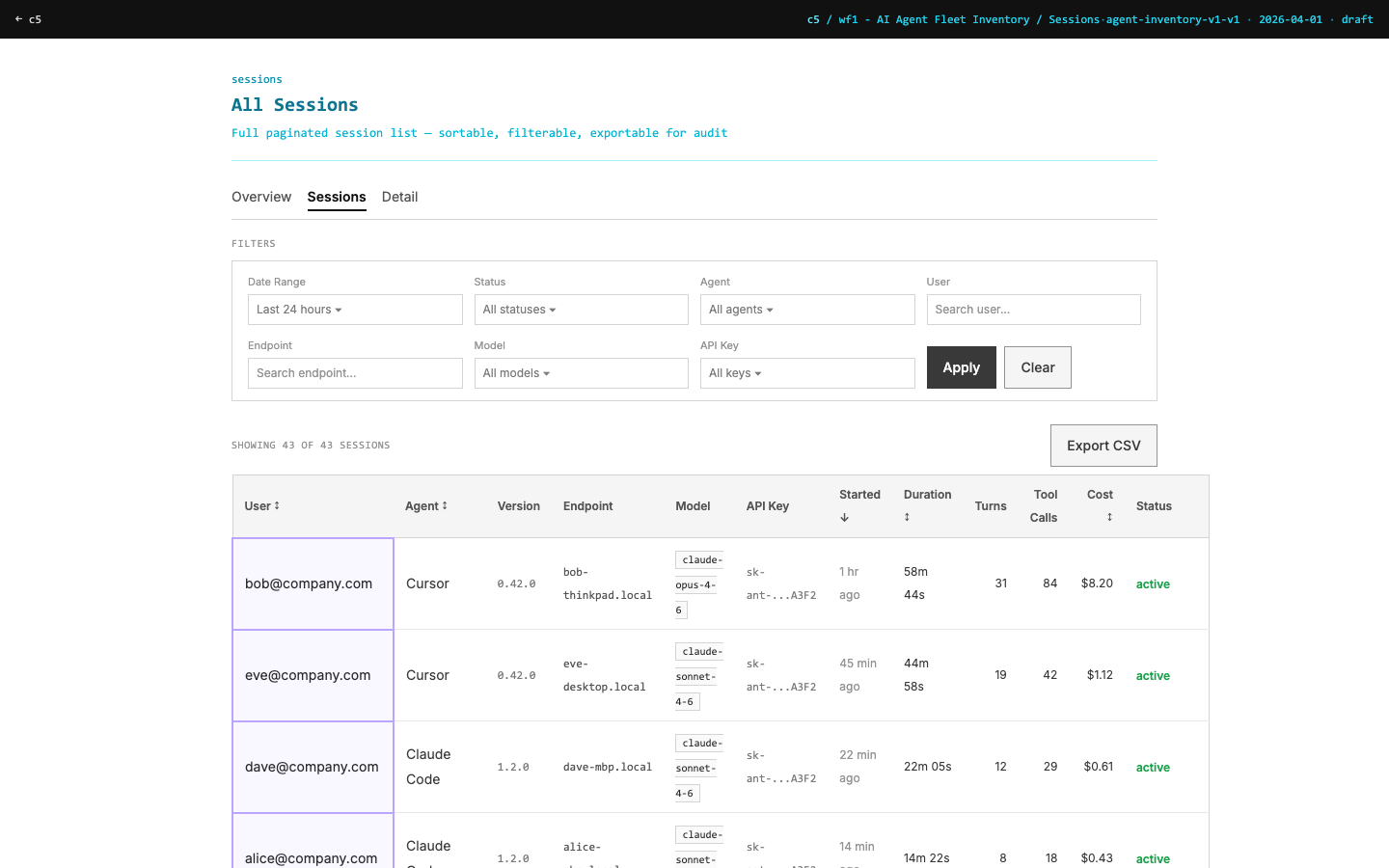
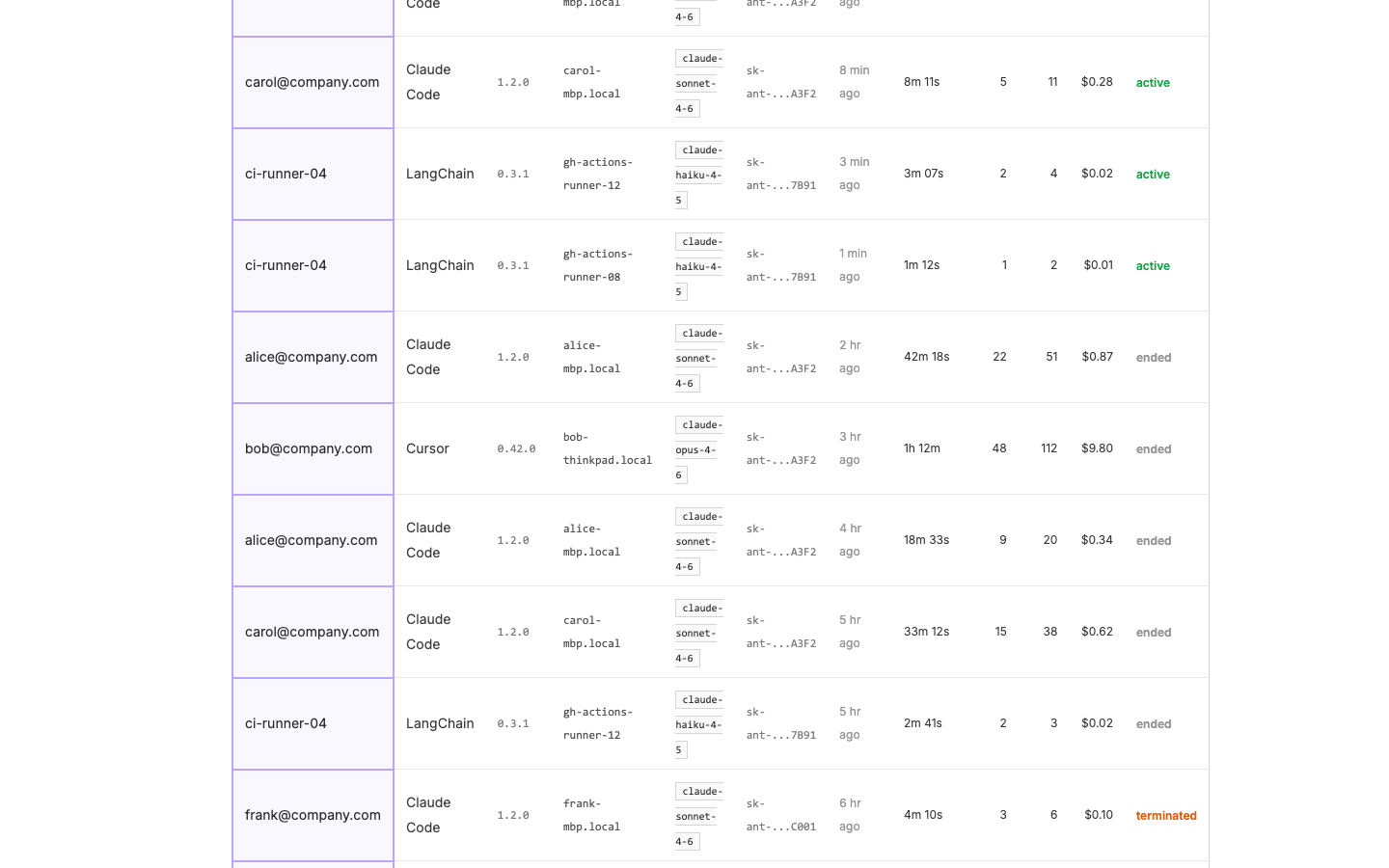
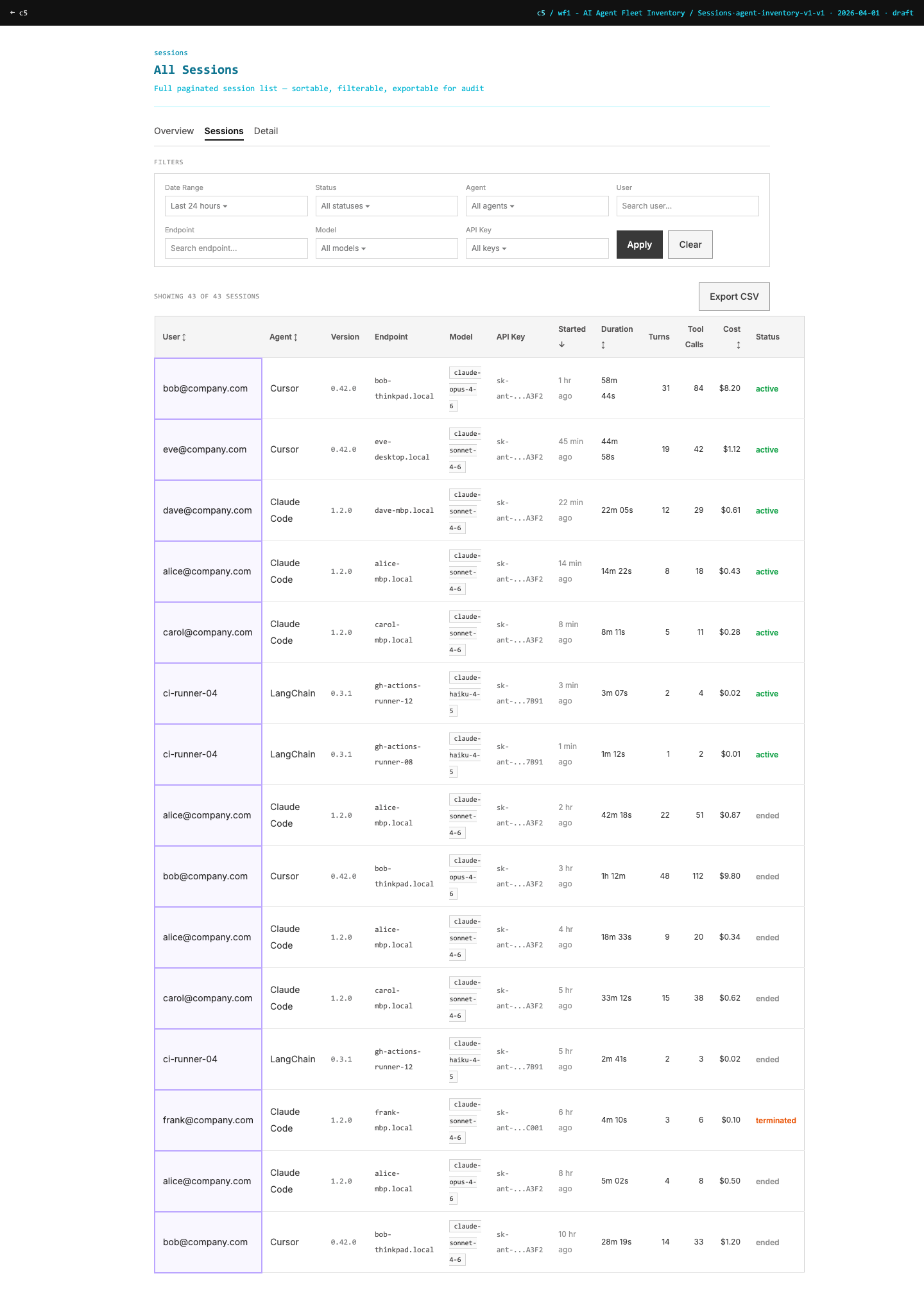
Established the foundational data model for AI agent visibility. Defined 10 top-level inventory items organized into five categories (Core, Identity, Provider, Capabilities, Exposure) plus two session-detail-only entities (LLM Turn, Tool Call). Produced the agent-inventory wireframe (overview, sessions, detail) as a proof-of-concept for the inventory UI pattern. Feeds directly into c6, which takes these models and designs the full dashboard.
Core Value Propositions
- Discovery / Inventory — full runtime visibility into every agent, the MCP servers and tools they call, and the resources they invoke
- Hidden Risk / Exposure — map secondary calls and delegation chains beyond the direct LLM API calls
- Security Policies — define permissible behavior and alert on deviations
Status
- Research complete —
research/session-observability.md - Inventory items & data models —
models.md - Brief written —
briefs/agent-inventory.md - Wireframes generated —
app/pages/c5/wireframes/agent-inventory-v1/(overview, sessions, detail) - Flow connected
Visual record
5 captures — heroes, page slices, and full-page renders. Click to view.